

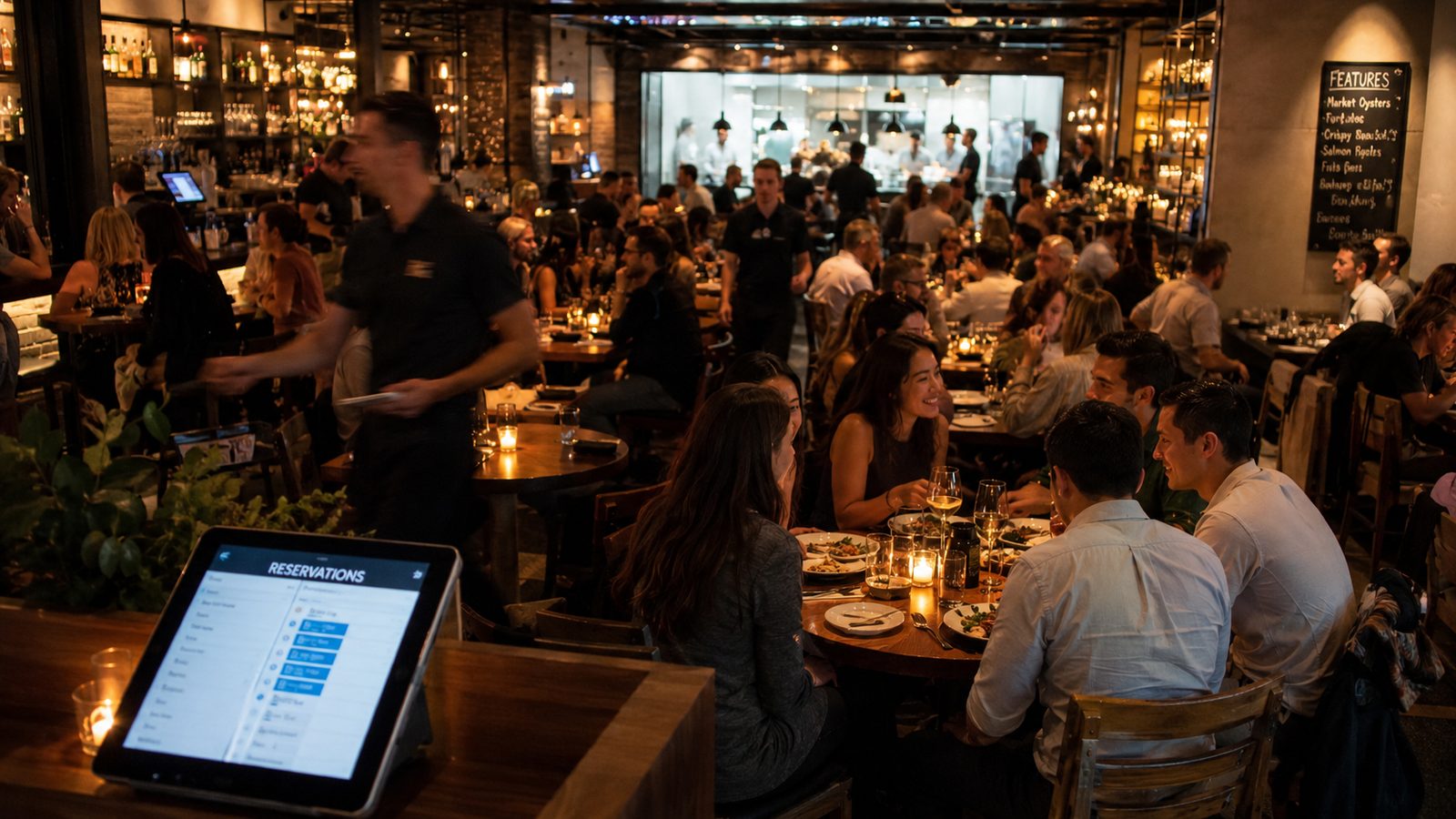
If you run a restaurant in Thailand, you already know the quiet math of a slow night. This post is about why ads are important for restaurants, and why paid advertising is no longer a luxury for big brands but a practical tool for any owner who wants to decide how full the room gets. Your food can be excellent, your location can be good, your reviews can be strong, and the table by the window can still sit empty at seven on a Tuesday. Paid ads exist to close the gap between a great restaurant and a full one. This is not about spending for the sake of it. It is about deciding, on purpose, that fewer of your seats go to waste, night after night.
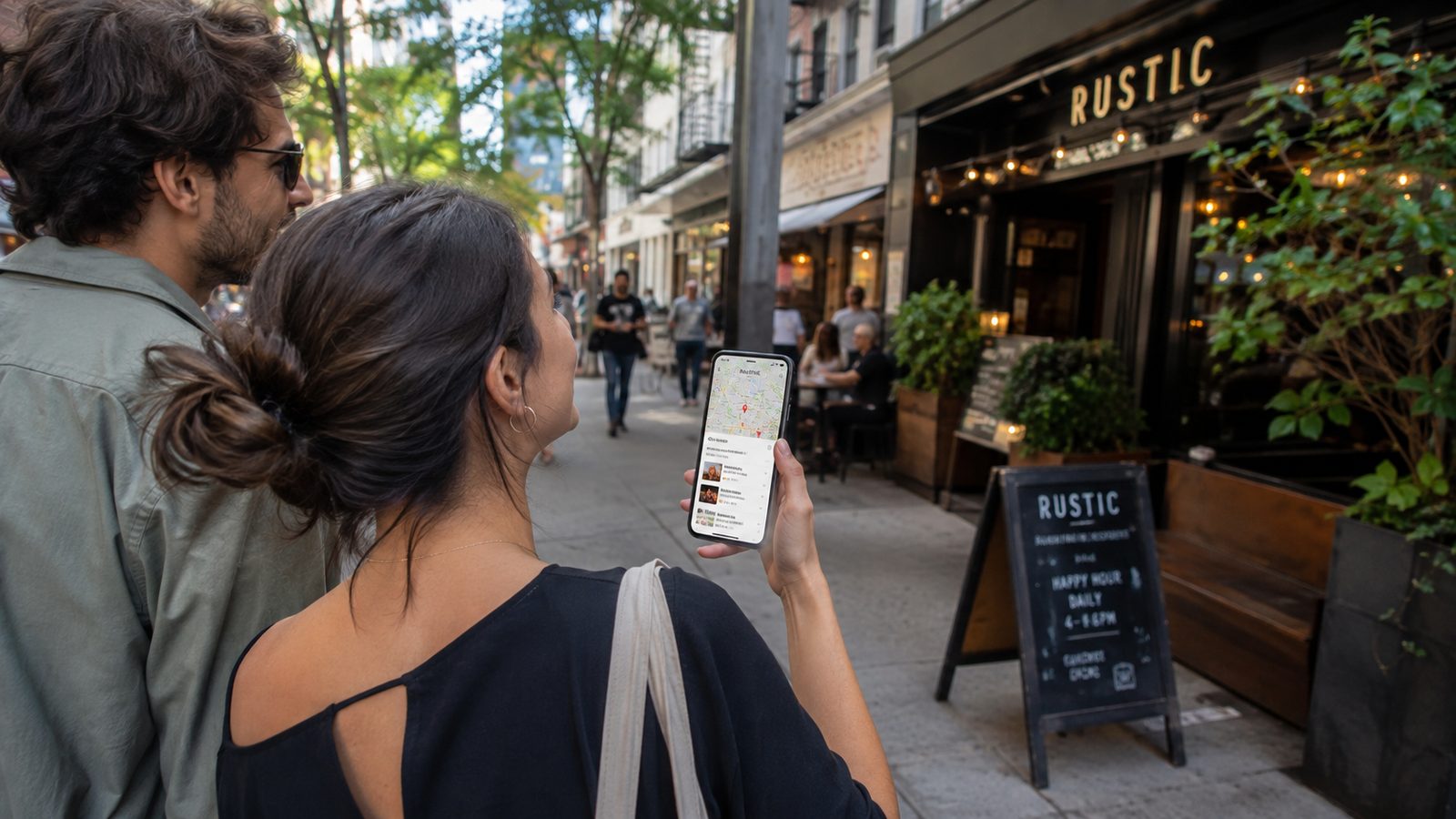
The empty table is the most expensive thing you own
A seat in your dining room is perishable inventory. Tonight’s empty table cannot be stored and sold tomorrow. When the clock passes closing time, that cover is gone for good, along with the drink, the dessert and the tip that would have come with it. An airline seat that flies empty and a hotel room that sleeps nobody work the same way, and the smartest operators in those industries spend heavily to avoid it.
Meanwhile your biggest costs do not wait for customers. Rent is due whether you serve two hundred guests or twenty. Your kitchen team is paid for the shift regardless of how many tickets come through the pass. The prep is done, the lights are on, the aircon is running. Those fixed costs are the same on a packed Friday and a dead Monday. The difference between the two nights is almost pure revenue, and the empty seat is where that revenue quietly leaks away. Once you see a slow night as lost inventory rather than just a quiet evening, spending to fill it stops looking optional.
Why organic reach alone will not fill your room
Every owner is told to post on social media, keep the Google profile fresh and wait for word of mouth. All of that matters and none of it should stop. The problem is speed and control. Organic reach is slow, gradual and unpredictable. A social post reaches a slice of the people who already follow you, and most of your followers are not hungry at the moment they scroll past. Search visibility builds over months and you cannot switch it on for this Saturday. Word of mouth is wonderful and entirely outside your hands.
Paid advertising solves a different problem: it buys immediate, targeted visibility at the two moments that matter most. The moment of intent, when someone is searching Google or Maps for a place to eat right now, and the moment of appetite, when someone is scrolling their feed, hungry, with no fixed plan. Organic hopes to be found. Ads choose to be seen. That is the core of why ads are important for restaurants that cannot afford to wait a whole season for traffic to build.
Why ads are important for restaurants that live by the calendar
Think about the situations that actually hurt. A slow Tuesday that repeats every week. A brand new opening where nobody knows you exist yet. A seasonal dip when the tourists thin out or the rain sets in for days. A soft launch of a new menu that needs bodies in seats to build momentum. In every one of these, the problem is time. You need covers on a specific date, not eventually.
This is where paid ads are simply built for the job. You can raise visibility for a specific week, a specific night, even a single lunch service, then pull it back when you are full. When the rain keeps people home, you can put an offer in front of the people closest to you and give them a reason to come out anyway. Search and organic posting cannot be summoned on a deadline. Ads can. For a business that lives and dies by the calendar, that on-demand control is the whole point. You stop being at the mercy of the weather and the season and start treating a quiet night as a problem you can act on this week.
The precision most owners underestimate
The old picture of advertising is a billboard you pay for and hope the right people drive past. Digital restaurant ads are the opposite. You control who sees them with a precision that would have sounded like fantasy a generation ago. You can put your restaurant in front of:
- People physically near you right now, not diners across the city who will never travel to reach you.
- People at the time of day that matters, so your lunch push lands before noon and your dinner push lands in the late afternoon.
- People whose behaviour signals interest in your kind of food, your price range or the occasion you serve, from date night to a family gathering.
And you decide the money. You choose when to spend more, when to slow down and when to pause entirely. Full for the weekend already? Pause. Big gap next Wednesday? Push. Nobody is forcing you to keep paying when you do not need the covers. That combination of targeting and control is something no organic channel can give you.
The two jobs of restaurant ads
Restaurant advertising does two different jobs, and confusing them is why some owners feel ads did not work. The jobs map neatly onto how people actually decide where to eat.
Search ads capture people who already want to eat
When someone opens Google or Maps and types restaurant near me, the name of a dish, or the kind of food they are craving, they are not browsing. They are hungry, they have decided to spend money, and they are choosing between a handful of options in the next few minutes. Search ads put you at the top of that decision. You are not creating the desire, you are catching it at the exact instant it exists. For proximity-driven, high-intent moments, this is the highest quality traffic a restaurant can buy.
Social ads create desire before hunger strikes
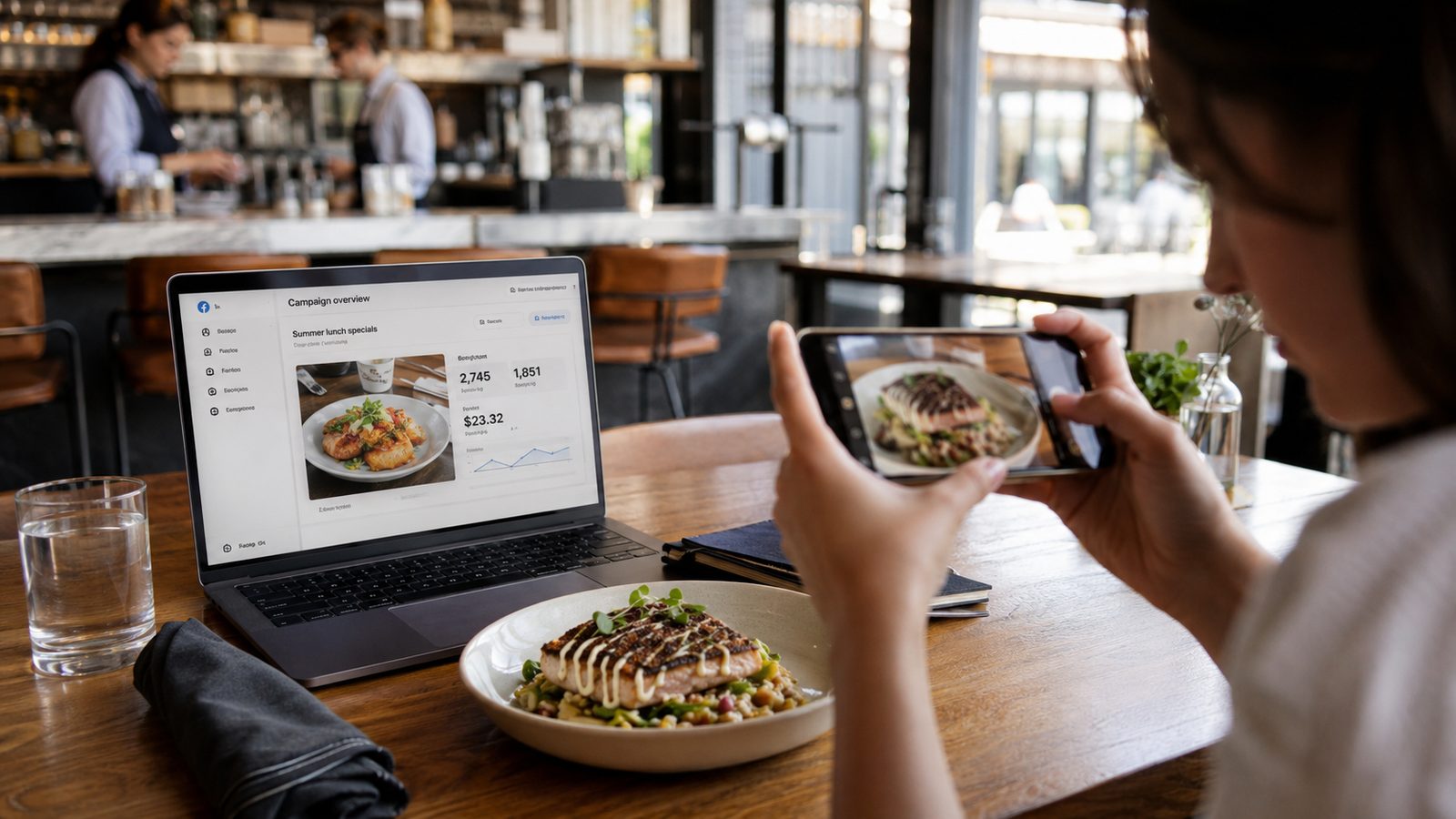
Facebook, Instagram and TikTok work earlier in the story. Nobody opens TikTok to book a table, but a beautiful plate of food, a sizzling pan or a warm room on a Friday night plants a craving and a name. Social ads build desire and keep you top of mind, so that when hunger does arrive, you are the place they already thought about. Then retargeting closes the loop: the people who visited your page or looked at your menu but did not book get a gentle, well-timed reminder to finish what they started.
Ads make everything else you do work harder
Here is the point that changes how owners think about this. Ads do not replace your foundation, they amplify it. A strong Google Business Profile, honest and appetising photos, and a healthy set of reviews all convert far better when ads send qualified, ready-to-eat people to look at them. Without ads, your best assets are seen mostly by people who already found you. With ads, they go to work on new people at the exact moment those people are deciding. The photo that makes someone’s mouth water only helps if the right hungry person sees it. Ads are how you make sure they do.
The numbers that actually matter
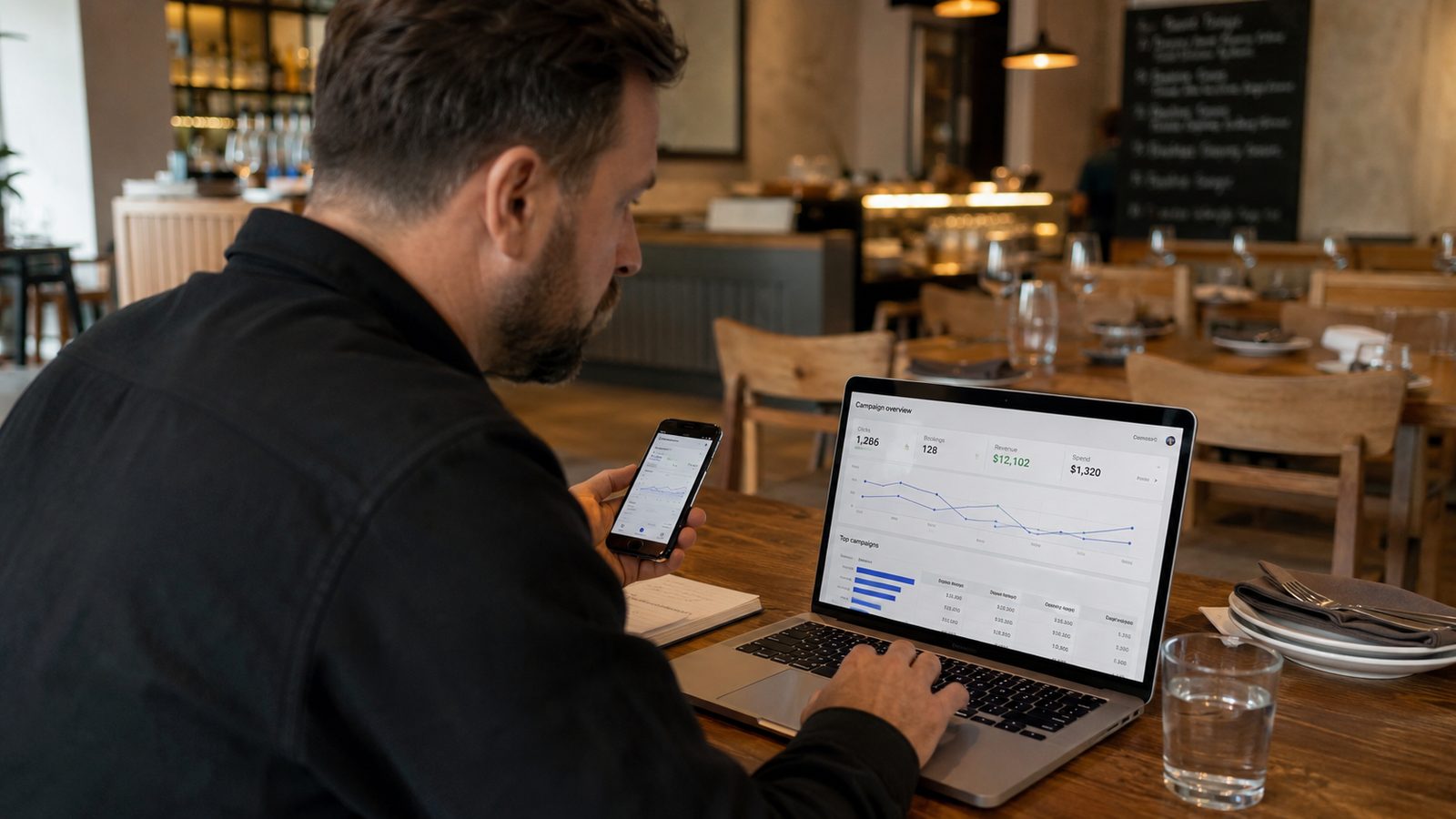
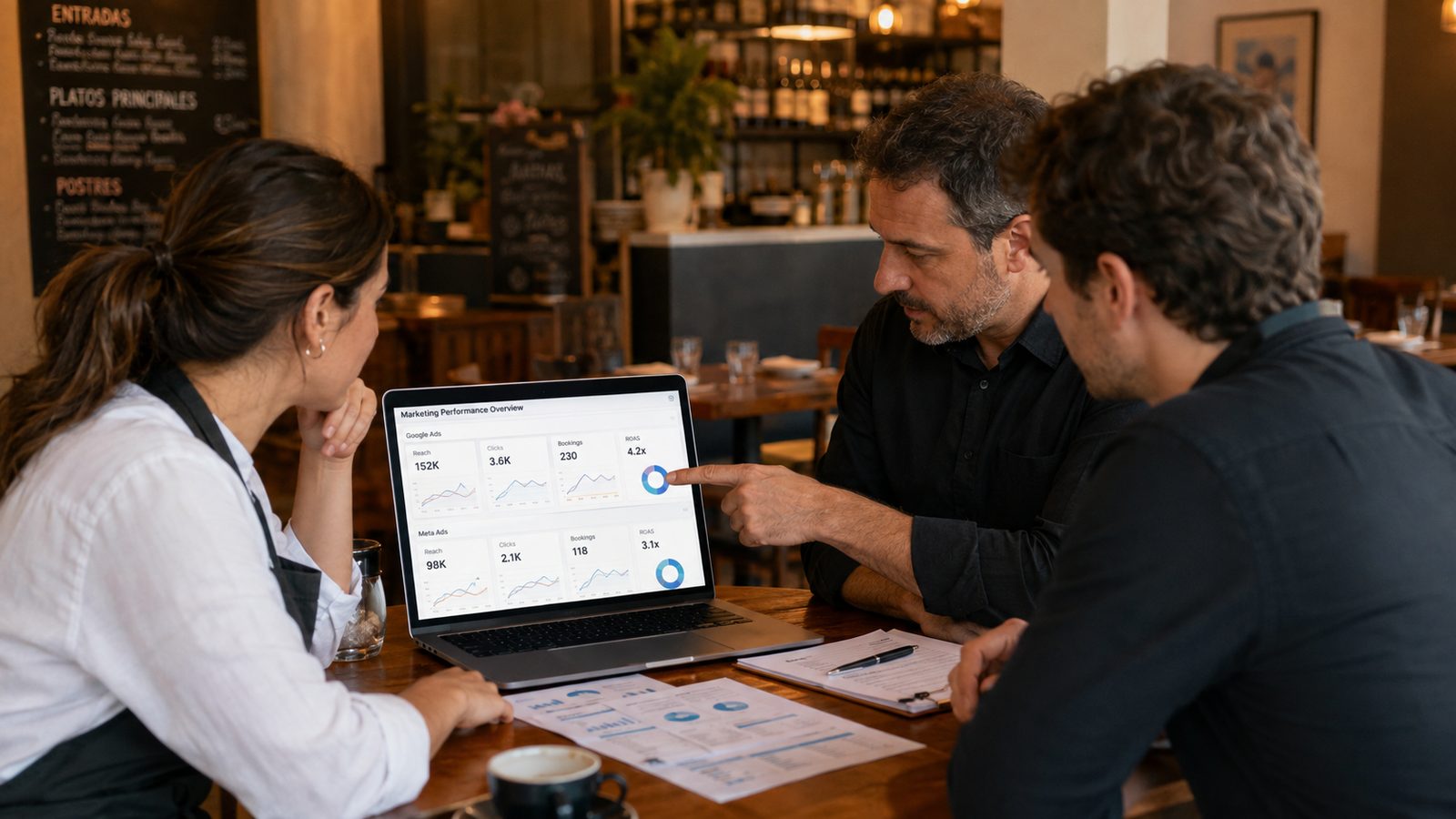
Owners are rightly tired of vanity metrics. A post with plenty of likes and an empty dining room is not a success. The honest strength of paid advertising is that it ties to the things you can bank. Instead of applause, you can look at covers booked, tables reserved, requests for directions to your door, calls to the restaurant, and the guest spend those visits bring. You can set all of that against what you put into the ads and see what came back. These are the numbers that pay your rent, not the numbers that decorate a feed.
That is a fundamentally different conversation from organic guessing. When you can see which campaign, which offer and which time of day produce real visits, you stop spending on what does not work and put more behind what does. Advertising becomes a dial you adjust with evidence, connected directly to revenue, covers and reservations, rather than a mystery you hope is helping somehow.
The objections, and why they usually miss
Three doubts come up again and again, and each one contains a grain of truth wrapped around a wrong conclusion.
Ads are expensive. An empty table is more expensive, every single night. The real question is not the cost of ads but the return, and you control the spend down to a level you are comfortable with. Money that gets wasted usually points to poor targeting or no tracking, not to a channel that simply takes too much.
I tried ads once and they did not work. This is almost always a setup problem, not proof that ads fail. Boosting a random post to everyone, sending clicks to a page with no clear next step, running with no offer and no tracking: that is how money disappears. The channel was not the fault. The aim was.
My food should speak for itself. It should, and it can only speak to the people who walk in. Ads are how the food gets a first audience. The best kitchen on the street still loses to the average one next door if that neighbour is the place people see when they are deciding where to go.
What Thailand’s diners are actually doing on their phones
The case for ads is even stronger here because of how people in Thailand find places to eat. Diners are mobile-first, deciding in the moment on the phone in their hand. Tourists near hotels, malls and the airport search in English for food close by, often minutes before they choose. Locals search in Thai and scroll Facebook, Instagram and TikTok throughout the day. LINE sits in the middle of daily life. Mall foot traffic can be captured the instant someone nearby is deciding between the food court and a proper sit-down meal.
Each of these is a behaviour you can meet on purpose with ads instead of hoping to be stumbled upon. English search near a hotel, Thai search across town, a craving sparked by a short video clip: paid advertising lets you show up deliberately for each one, in the language and on the platform where that guest already is. A diner deciding on a phone will not scroll back to find you later. You either show up in that window or you lose the cover to whoever did.
Get these right before you spend
Ads are fuel, not a fix. Pour fuel on a strong foundation and it accelerates the whole business. Pour it on a leaky one and you are paying to send people toward a poor experience. Before you scale spending, make sure you have:
- An accurate Google Business Profile with correct hours, location and a phone number that actually works.
- A clear booking or contact path, so a ready guest can reserve or find you in seconds without friction.
- Honest, appetising photos that match what really lands on the table.
- A clear reason to visit, whether that is a signature dish, an offer or an occasion you own.
Get these right and every unit of ad spend works harder. Leave them leaking and no amount of clever targeting will save the campaign. This is not a reason to delay, it is a short checklist to finish first.
Ads are how you take control of your covers
The real reframe is this. Advertising is not a cost centre you simply tolerate. It is the one lever that lets you decide how full your restaurant gets, instead of opening the doors and hoping the room fills itself. Every other part of the business rewards planning and control. Your covers deserve the same treatment. A slow night is not fate, it is a gap you are allowed to close. If you want a straight, practical read on whether paid ads can fill more of your seats, the honest next step is to talk to us about restaurant ads and look at your specific situation together. You will leave knowing whether it is worth it for your restaurant, with no guesswork.
Stop letting good tables sit empty. Take control of your covers and talk to us about restaurant ads to see what a focused campaign could do for your dining room.